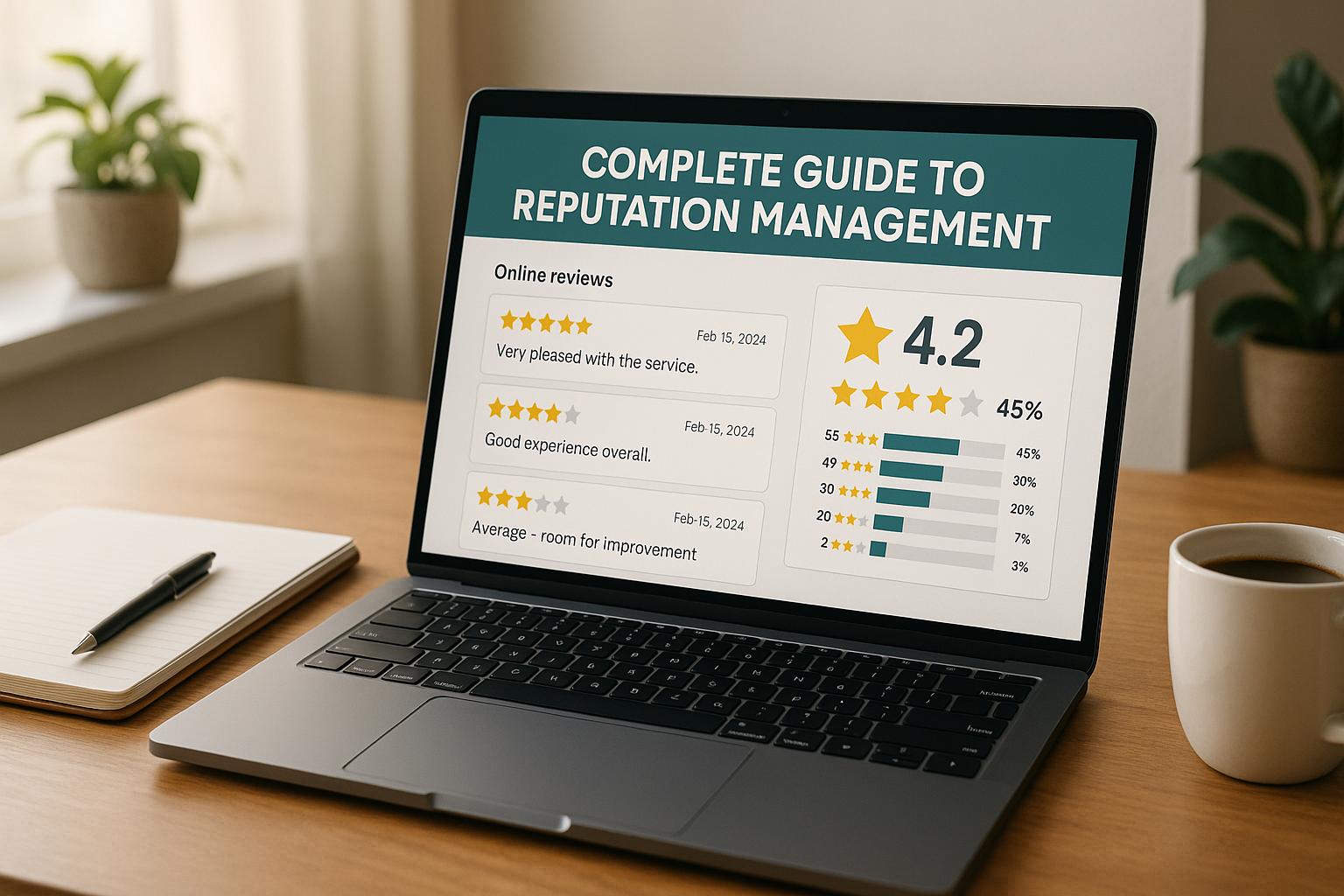
Complete Guide to Reputation Management
September 22, 2025Your online reputation can make or break how customers perceive your business. Negative reviews or posts can spread quickly, impacting trust and sales. This guide covers everything you need to know about managing and improving your digital image, from monitoring feedback to responding to reviews and building a strong online presence.
Key Takeaways:
- Reputation Management Basics: Monitor and influence how your brand appears online.
- Why It Matters: Online reviews shape consumer decisions - positive reviews boost trust, while negative ones can deter customers.
- Action Steps:
- Track brand mentions using tools like Google Alerts and social media monitoring.
- Respond thoughtfully to reviews, whether positive or negative.
- Request reviews from satisfied customers and make it easy for them to share feedback.
- Keep business listings accurate and up-to-date across platforms.
- Tools and Services: Use tools like Brand24, Hootsuite, and Mention for monitoring, or consider professional help for complex challenges.
Your reputation isn’t static - it requires consistent effort. Learn how to manage feedback, address issues, and showcase your strengths to maintain a positive image.
Online reputation management: The complete guide for business owners
How to Monitor Your Online Reputation
Keeping tabs on what people are saying about your business online is crucial. By establishing a solid system for monitoring, you can stay informed, respond promptly, and make strategic adjustments to protect and improve your reputation.
Track Brand Mentions Across Platforms
Start with Google Alerts - a simple yet effective tool to monitor mentions of your business. Set up alerts for your business name, key personnel, and product names, including common misspellings or variations. For instance, if your business is "Smith's Auto Repair", you might want alerts for terms like "Smith Auto", "Smiths Auto Repair", or "Smith's Automotive."
Go beyond just your name. Keep an eye on industry-specific terms that could impact your reputation. For example, a restaurant might monitor phrases like "food poisoning [city name]" or "restaurant health violations [area]" to catch potential issues early.
Social media monitoring is equally important. Platforms like Facebook, Twitter, Instagram, and LinkedIn each cater to different audiences and types of conversations. Use tools like saved searches or platform-specific features to track mentions. On Twitter, for example, you can use advanced search to filter results by location or date for more precise insights.
Don’t forget about review sites. Major platforms like Google Reviews, Yelp, and the Better Business Bureau are essential, but also consider industry-specific sites. A B2B company might prioritize platforms like Clutch or G2 over consumer-focused review sites.
Lastly, include forums and online communities like Reddit and Quora in your monitoring efforts. These spaces often host candid discussions that can offer a deeper understanding of customer perceptions and potential concerns.
Understanding Feedback Patterns and Sentiment
Once you’ve identified where your business is being mentioned, the next step is analyzing the tone and trends behind the feedback.
Sentiment analysis helps you gauge the emotional tone of mentions and reviews. Words like “disappointed,” “frustrated,” or “terrible” point to problems, while terms like “excellent,” “impressed,” or “recommend” signal positive experiences. Monitoring the frequency of mentions can also reveal patterns - sudden spikes in negative feedback, for instance, might indicate a specific issue that needs immediate attention.
Dive deeper with topic clustering, geographic analysis, and timing patterns. Group feedback into themes like product quality, service speed, or customer support. For businesses with multiple locations, this can help pinpoint location-specific issues. Timing patterns, such as negative reviews during peak hours, might highlight operational challenges like understaffing.
Key U.S. Platforms to Monitor
To get a clear picture of your reputation in the U.S., focus on the platforms most relevant to your audience.
- Google Reviews: These are essential since they appear prominently in search results and influence local search rankings.
- Yelp: Especially important for restaurants, retail, and service businesses, Yelp remains a go-to for urban consumers. Its algorithm takes into account review quality and reviewer activity.
- Facebook Reviews: These integrate with your social media presence and can boost word-of-mouth marketing, especially with Facebook’s recommendation feature.
- Better Business Bureau (BBB): This platform appeals to consumers who value traditional credentials, with ratings and complaint resolution records often showing up in search results.
- Industry-specific platforms: Depending on your business, you may need to monitor niche sites. For example, healthcare providers should focus on Healthgrades and Vitals, while hotels should monitor TripAdvisor and Booking.com. Legal professionals might prioritize Avvo, and home service providers should keep an eye on Angie's List.
- Local platforms: Platforms like Nextdoor or community forums can carry significant weight in neighborhood-level conversations, particularly in smaller markets.
To stay on top of things, create a monitoring schedule. High-volume businesses or those dealing with a crisis may need daily checks, while smaller operations might find weekly monitoring sufficient.
Keep detailed records of mentions and actions taken. Save screenshots of important reviews, note response times, and document any steps you’ve taken to address concerns. These records can help you track progress over time and demonstrate your commitment to managing your reputation effectively.
Monitoring your online presence is the first step in safeguarding your business’s image. It gives you the insights you need to take proactive steps, which we’ll explore in later sections.
How to Respond to Reviews and Feedback
The way you respond to reviews can significantly influence how people perceive your business. A thoughtful, well-crafted reply shows you value your customers, while a careless response can escalate issues and turn potential customers away. The trick is to approach every piece of feedback with care and strategy.
Best Practices for Review Responses
Respond promptly - ideally within 24-48 hours. A quick response shows you're attentive and care about customer concerns. Even a short acknowledgment like, "Thank you for bringing this to our attention. We'll follow up soon", can buy you time for a more detailed reply while reassuring the customer that you're on it.
Be professional but personable. Address reviewers by name whenever possible, and refer to specific details in their review. Instead of relying on canned, generic replies, mention the service they used or the issue they faced. This makes it clear you’ve read their feedback and take it seriously.
Show genuine gratitude for positive reviews. A simple "Thank you, [Name]! We're so glad you enjoyed your experience" works well. If they mention a specific employee or service, highlight it: "We’ll make sure Sarah hears about your kind words - she’ll be thrilled!"
Keep it short but meaningful. Most responses should be 2-4 sentences long. Focus on the essentials: acknowledge their feedback, address any concerns, and invite further communication if necessary. Overly long replies can come across as defensive or overwhelming.
Maintain a consistent tone. Whether your brand voice is formal or casual, stick to it. For example, a law firm might write, "We appreciate your feedback and welcome the opportunity to discuss this further", while a coffee shop might say, "Thanks for the review! Stop by anytime so we can make things right."
These simple practices can make a big difference in how your business is perceived.
Handling Negative Feedback and Complaints
Avoid public arguments. If someone criticizes your business, don’t argue or tell them they’re wrong. Instead, acknowledge their experience and focus on solutions. Replace responses like "That’s not our policy" with "We understand your frustration and want to make this right."
Take complex issues offline. For more detailed problems, provide a direct contact: "We’d love to discuss this further and resolve your concerns. Please call us at (555) 123-4567 or email manager@business.com."
Be direct and address the issue. If a customer complains about long wait times, acknowledge it: "You’re right - 45 minutes is much too long to wait. We’ve adjusted our staffing during peak hours to improve service times."
Show that you’re learning from feedback. When appropriate, mention changes you’ve made as a result of customer input. For instance: "Thanks to feedback like yours, we’ve introduced a new system to ensure orders are completed faster."
Handle false or unfair reviews calmly. If a review seems fake or inaccurate, respond factually but avoid confrontation. For example: "We’ve checked our records for the date mentioned and don’t show any visits or appointments. Please contact us directly so we can clarify this situation."
Don’t ignore one-star reviews. These tend to draw the most attention from potential customers. A professional, measured response can actually boost your reputation by showing how you handle tough situations.
Legal Guidelines for U.S. Businesses
When responding to reviews, it’s essential to stay within legal boundaries. Following these guidelines will help protect your business while maintaining professionalism.
Respect customer privacy. Avoid sharing any personal details about customers in your responses. Instead, use general language like, "We’d like to discuss your experience further."
Know your rights. U.S. businesses are allowed to respond to reviews, but you can’t pressure customers to remove honest feedback. The Consumer Review Fairness Act protects customers' rights to share their experiences, even negative ones.
Avoid legal threats. Publicly mentioning lawsuits or legal action can harm your business's image. If you believe a review is defamatory, consult an attorney privately instead of addressing it in a public forum.
Report inappropriate reviews. Most platforms let you flag reviews containing profanity, personal attacks, or irrelevant content. However, harsh opinions about your service quality usually don’t qualify for removal.
Follow industry-specific rules. Certain industries, like healthcare and finance, have stricter privacy laws. For example, HIPAA prevents healthcare providers from acknowledging patient relationships in responses. Always check regulations specific to your field before replying.
Document everything. Keep records of reviews and your responses, especially for negative feedback. This can be helpful if disputes arise or if you need to show that you’ve made good-faith efforts to resolve issues.
Be cautious when employees are mentioned. If a review names an employee, avoid publicly blaming them. Instead, focus on addressing the customer’s experience. This protects your team while keeping the response professional.
sbb-itb-cef5bf6
Building a Strong Online Presence
Once you've mastered monitoring and responding to reviews, the next step is establishing a strong digital footprint. This involves generating consistent positive content, encouraging reviews, and ensuring your business information is accurate across platforms.
Getting More Positive Reviews
Ask for reviews right after a positive experience. Timing is key. A restaurant can ask diners who rave about their meal, or a contractor can request feedback immediately after a project wraps up.
Make it easy to leave a review. Share direct links to your review profiles through text or email. Instead of saying, "Find us on Google", send a direct link to your Google Business Profile, Yelp page, or other relevant sites like Angie's List or Healthgrades.
Use multiple channels to request reviews. Don’t limit yourself to one method. Include review requests in email signatures, receipts, follow-up emails, or even on business cards. For example, a dentist’s office might place cards with QR codes in the waiting room, while an online retailer could include a review link in shipping confirmation emails.
Send polite reminders. If someone agrees to leave a review but hasn’t done so, follow up with a friendly nudge. For instance: "Hi [Name], thanks again for choosing us! If you have a moment, we’d love for you to share your experience in a quick review."
Start with your happiest customers. Reach out to those who’ve had great experiences first. Their reviews can set the tone for others. A landscaping company might begin with long-term clients, while a new restaurant could ask friends and family who’ve visited often.
Train your team to spot opportunities. Teach employees to recognize when customers are happy and encourage them to ask for reviews. If a customer says, "This is exactly what I needed", the team can respond with, "We’re thrilled to hear that! Would you mind sharing your feedback in an online review?"
These strategies lay the groundwork for building trust through content.
Creating Content That Builds Trust
Share real-life success stories. Use testimonials and case studies that focus on specific results instead of vague praise. For example, a marketing agency might showcase how they increased a client’s website traffic by 150%, complete with screenshots and a quote from the client.
Educate your audience. Share helpful, non-promotional content that highlights your expertise. A plumbing company could write about preventing frozen pipes, while a financial advisor might explain retirement planning tips. This positions you as a knowledgeable resource.
Introduce your team and process. Show the faces behind your business and what happens behind the scenes. A bakery might post videos of their bread-making process, or a law firm could share bios that highlight each attorney’s experience and approach.
Address common concerns upfront. Create content that answers frequently asked questions or addresses hesitations customers might have. For instance, a veterinary clinic could write about what to expect during a pet’s first visit, including costs and procedures.
Highlight community involvement. Share your local connections by showcasing sponsorships, charity work, or partnerships. A hardware store might post photos from a community cleanup event, while a restaurant could feature the farms that supply their ingredients.
Keep your content fresh. Regular updates signal that your business is active. Whether it’s a blog post, social media update, or customer spotlight, aim to add new content weekly.
A content strategy is only effective when paired with accurate business information. Next, let’s ensure your listings reflect your brand consistently.
Keeping Business Listings Accurate
Claim and verify your listings. Secure your presence on platforms like Google Business Profile, Yelp, Facebook, and industry-specific directories. For example, restaurants should focus on OpenTable and DoorDash, while healthcare providers might prioritize Healthgrades and Zocdoc.
Maintain consistent business details. Use the same Name, Address, and Phone Number (NAP) across all platforms. Keep a master document with this information to avoid discrepancies.
Update hours promptly. If your hours change - whether due to holidays, renovations, or staffing - update them across all platforms within 24 hours. Many platforms even allow you to set special hours for temporary changes.
Provide complete business information. Include your website, email, business description, accepted payment methods, and special features. For instance, a restaurant should mention delivery options, outdoor seating, and reservations, while a retail store might highlight free parking or wheelchair accessibility.
Monitor for unauthorized changes. Occasionally, competitors or users may suggest edits to your listings. Check your profiles monthly and set up notifications to track any changes.
Keep photos current. Use high-quality, up-to-date images that reflect your business. A salon can showcase recent styles, while a restaurant should feature appetizing dishes and clean dining spaces.
Respond to customer questions. Many platforms allow users to ask questions directly on your listing. Address these promptly, whether they’re about parking, pricing, or product availability. Your responses help both the person asking and future customers.
Merge duplicate listings. Multiple listings for the same business can confuse customers and split reviews. Search for duplicates and contact the platform to merge or remove them. This ensures customers find the right information and strengthens your online reputation.
Tools and Services for Reputation Management
If you want to protect and enhance your brand's image, having the right tools and expert services in your corner is key. These resources make it easier to monitor your reputation, address issues quickly, and stay ahead of potential problems that could slip through the cracks with manual efforts.
Popular Monitoring and Management Tools
One of the simplest ways to start monitoring your reputation is with Google Alerts. It’s free and easy to set up. Just enter your business name, key personnel, or industry terms, and you’ll get email updates whenever those keywords pop up online - whether in news articles, blogs, or other platforms.
For a more advanced approach, Brand24 tracks mentions across social media, blogs, forums, and news sites in real time. What sets it apart is its ability to analyze sentiment, helping you catch trends early and manage potential PR issues before they escalate.
Hootsuite combines reputation monitoring with social media management. From one dashboard, you can schedule posts, engage with comments, and track brand mentions, making it a powerful all-in-one tool.
Another strong option is Mention, which focuses on real-time tracking across the web and social networks. It gives you detailed insights into who’s talking about your brand, where those discussions are happening, and how your reputation is shifting over time. It even offers competitive analysis, so you can see how you stack up against others in your industry.
When choosing tools, look for features like real-time alerts, broad platform coverage (including major U.S. platforms like Google Business Profile, Yelp, TripAdvisor, and Facebook), sentiment analysis, and intuitive dashboards that make it easy to manage everything in one place.
How SEO Werkz Enhances Reputation Management
While monitoring tools are essential, SEO Werkz takes reputation management a step further with tailored solutions designed to protect and strengthen your brand.
We combine advanced tracking technology with industry-specific strategies to keep your online reputation on track. Our monthly reports provide a deep dive into your reputation’s performance, including sentiment analysis, review trends, and competitor comparisons. This helps you see not just what’s being said but also how perceptions of your brand are evolving over time.
With automated alerts, you’ll know immediately when new reviews are posted or when there’s a significant change in sentiment. This allows you to respond quickly - whether it’s celebrating positive feedback or addressing concerns before they grow.
Our team also focuses on building a strong online presence by creating and optimizing content that highlights your brand’s strengths. By actively generating positive content, we help reinforce your reputation.
In cases where serious challenges arise, our crisis management protocols provide step-by-step guidance. From crafting the right responses to coordinating actions across multiple platforms, we ensure your approach is both effective and aligned with your brand’s voice. Additionally, we offer solutions tailored to your industry, recognizing the unique challenges and regulations that might apply.
When to Get Professional Help
Sometimes, managing your reputation requires more than just tools. If negative reviews start to hurt your revenue, customer trust, or inquiries, it might be time to call in the experts. Professional help is especially valuable when dealing with complex issues like coordinated negative campaigns or widespread bad publicity. It’s also a smart move for businesses with limited time or expertise to handle these challenges effectively.
For larger companies or those in competitive markets, professional reputation management often becomes a must. These services provide detailed reporting and coordinated strategies across platforms, ensuring your online presence remains strong and resilient.
Conclusion
Your online reputation isn't something to set and forget - it demands ongoing attention and thoughtful strategies. With 85% of consumers researching brands online before making a purchase, managing your reputation is essential for building trust and driving success.
Key Takeaways
Here’s a quick recap of the core strategies for effective reputation management:
- Proactive monitoring is the backbone of reputation management. Keeping tabs on brand mentions, reviews, and social media feedback allows you to address potential issues before they grow into larger problems.
- Engaging with feedback - both positive and negative - shows your audience that you value their input. Prompt, professional responses highlight your commitment to improving customer experiences.
- Building a positive online presence ensures that when people search for your business, they find accurate and favorable information. This includes creating quality content and optimizing your profiles to reflect your brand’s strengths.
- Review management is about encouraging happy customers to share their experiences while handling negative feedback with care and professionalism.
- A crisis management plan ensures you're ready to act swiftly when challenges arise. Quick responses can significantly minimize potential damage to your reputation.
The SEO Werkz Advantage
Taking these principles to the next level, SEO Werkz provides tailored solutions to strengthen and safeguard your online presence.
Our approach goes beyond simple monitoring. We focus on showcasing your business’s strengths and genuine efforts to improve, rather than merely suppressing negative feedback. By combining active management with strategic monitoring, we help steer the conversation toward positive and accurate information about your brand.
What makes SEO Werkz stand out? We integrate SEO expertise into every aspect of reputation management. This ensures that favorable content about your business ranks highly in search results. Plus, our customized digital marketing campaigns are designed to meet your unique needs and goals.
Whether you’re looking for quick fixes or long-term reputation management, SEO Werkz has the tools and expertise to protect and enhance your digital presence. Your reputation is a critical asset - let us help you build and maintain the trust that drives your business forward.
FAQs
What are the best tools to monitor and manage my online reputation?
To keep a close eye on and maintain your online reputation in 2025, some standout tools include Birdeye, Reputation.com, Yext, Podium, and Brand24. These platforms come equipped with helpful features like managing reviews, monitoring social media activity, and sending real-time alerts whenever your brand is mentioned. This makes it easier to stay on top of your digital presence.
With these tools, you can quickly address feedback, gauge customer sentiment, and build a strong online image - whether for your business or personal brand. Since each platform offers its own set of features, it’s worth exploring which one best fits your goals and requirements.
What should I do if my business gets a fake or unfair review?
If your business gets hit with a fake or unfair review, it’s crucial to respond quickly and with professionalism. Start by acknowledging the feedback and showing a willingness to resolve the issue, even if you suspect the review isn’t genuine. Keep your tone calm and avoid making accusations or engaging in arguments - escalating the situation won’t help.
If the review violates the platform’s guidelines, report it for removal. Platforms like Google offer steps to flag inappropriate reviews. While waiting for action, encourage happy customers to share their experiences to offset the negative impact. A polite and transparent response not only protects your reputation but also shows your dedication to great customer service.
How can I encourage satisfied customers to leave positive reviews?
The most effective way to get positive reviews is to ask your customers directly - and timing is everything. Reach out right after they’ve enjoyed a great experience with your product or service or just wrapped up a purchase. You can connect with them through email, text messages, or even social media.
To make it easy for customers to leave feedback, provide a direct link to your review platform. The simpler the process, the more likely they are to follow through. You can also highlight glowing reviews on your website or social media channels. This not only builds trust but also encourages others to share their own experiences, creating a ripple effect of engagement and credibility.