Top Tools for Email Personalization Using Customer Data
April 10, 2026Email personalization is no longer optional - it’s expected. Customers demand messages tailored to their interests, and businesses that deliver see the results: higher engagement, better conversions, and stronger loyalty. Tools like Klaviyo, Omnisend, and Insider make it easy to leverage customer data for smarter, more effective email campaigns.
Key Findings:
- 72% of customers engage only with relevant messages.
- Personalized emails can drive 6x higher transaction rates.
- AI-powered tools predict customer behavior, optimize send times, and personalize content dynamically.
- Brands like Adidas and Philips have seen conversion boosts of over 35% using these tools.
Top Tools:
- Klaviyo: Built for e-commerce, offering real-time data updates, predictive analytics, and multi-channel campaigns.
- Omnisend: Combines email, SMS, and push notifications with dynamic, behavior-triggered campaigns.
- Insider: Ideal for enterprises, integrating offline and online data with AI-powered segmentation.
- MoEngage: Focuses on data-driven engagement across multiple channels with real-time updates.
- Prospeo: High-accuracy email verification and lead generation for B2B campaigns.
Why It Matters:
Personalization boosts open rates, click-throughs, and revenue. Segmented campaigns can drive up to 760% more revenue than generic emails. With the right tools, even small teams can achieve these results.
Keep reading to discover how these platforms turn data into results.
4 Powerful Ways to Personalize Marketing Automation Emails
sbb-itb-cef5bf6
What to Look for in Email Personalization Tools
Not all email personalization tools are created equal. The best ones go beyond simply adding a first name to a subject line. They gather detailed customer data, offer smart audience segmentation, and automate personalization on a large scale. Here’s what sets top-tier platforms apart.
Data Collection and Enrichment
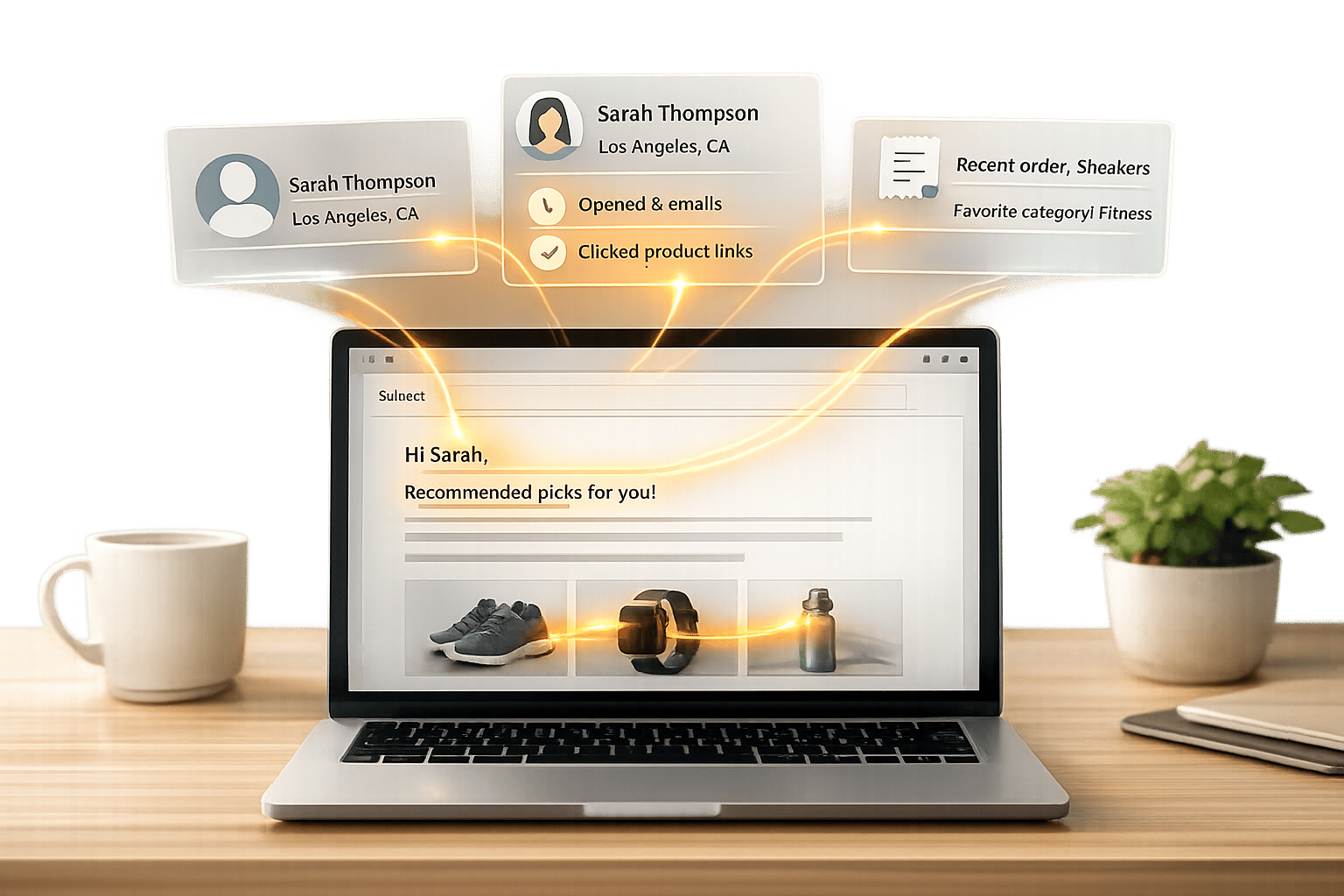
Personalization starts with solid data. The best tools pull information from various sources - CRMs, e-commerce platforms, customer service systems, and even point-of-sale data - into a single, unified database. This integration helps break down data silos and creates detailed customer profiles. These profiles combine basic identity details (like name and email) with behavioral data, such as browsing habits, purchase history, and abandoned carts.
Real-time tracking is a game-changer. It updates customer profiles instantly as new actions occur. For example, Forever 21 saw impressive results after using Zembula to automate personalization based on customer data. According to Ryan Hofmann, their VP of CRM and Channel Marketing, the team achieved an 11x return on ad spend by tailoring experiences to individual shopping behaviors.
Segmentation and Targeting
Effective segmentation is the backbone of personalized campaigns. The right tools allow you to divide audiences based on demographics, preferences, and behaviors, while also predicting which groups are most likely to convert. Dynamic segmentation takes it a step further by updating audience groups in real time, ensuring your campaigns stay relevant.
Automated customer journeys can significantly boost results. In fact, they generate up to 7x more orders compared to generic bulk emails. Thrive Causemetics experienced this firsthand when they implemented automated Smart Banners in their daily emails. CRM Manager Karly Kurata reported a 17% increase in total email revenue with less manual work. She shared:
"We are able to create more content in less time, provide a better personalization experience across the board, and increase revenue when using [Smart Banners]."
Once segmentation is complete, advanced insights help fine-tune targeting even further.
AI-Powered Insights
AI takes personalization to the next level by making it proactive rather than reactive. Instead of just responding to past behavior, AI tools predict future actions. They can identify customers likely to churn, estimate lifetime value, and even determine the best time to send emails for maximum engagement. Send-Time Optimization (STO) ensures emails are delivered when each subscriber is most likely to open them, rather than relying on generic timing for an entire segment.
Dynamic content generation adds another layer of personalization. It updates recommendations, subject lines, and visuals in real time, ensuring that emails reflect the latest user behavior the moment they’re opened. Companies like Philips have seen incredible results with AI-powered personalization. By using Insider One, Philips achieved a 40.11% increase in conversion rates and a 35% boost in average order value. Similarly, Lenovo used AI-driven email and web push notifications based on browsing behavior to cut cart abandonment by over 10%.
Best Tools for Email Personalization
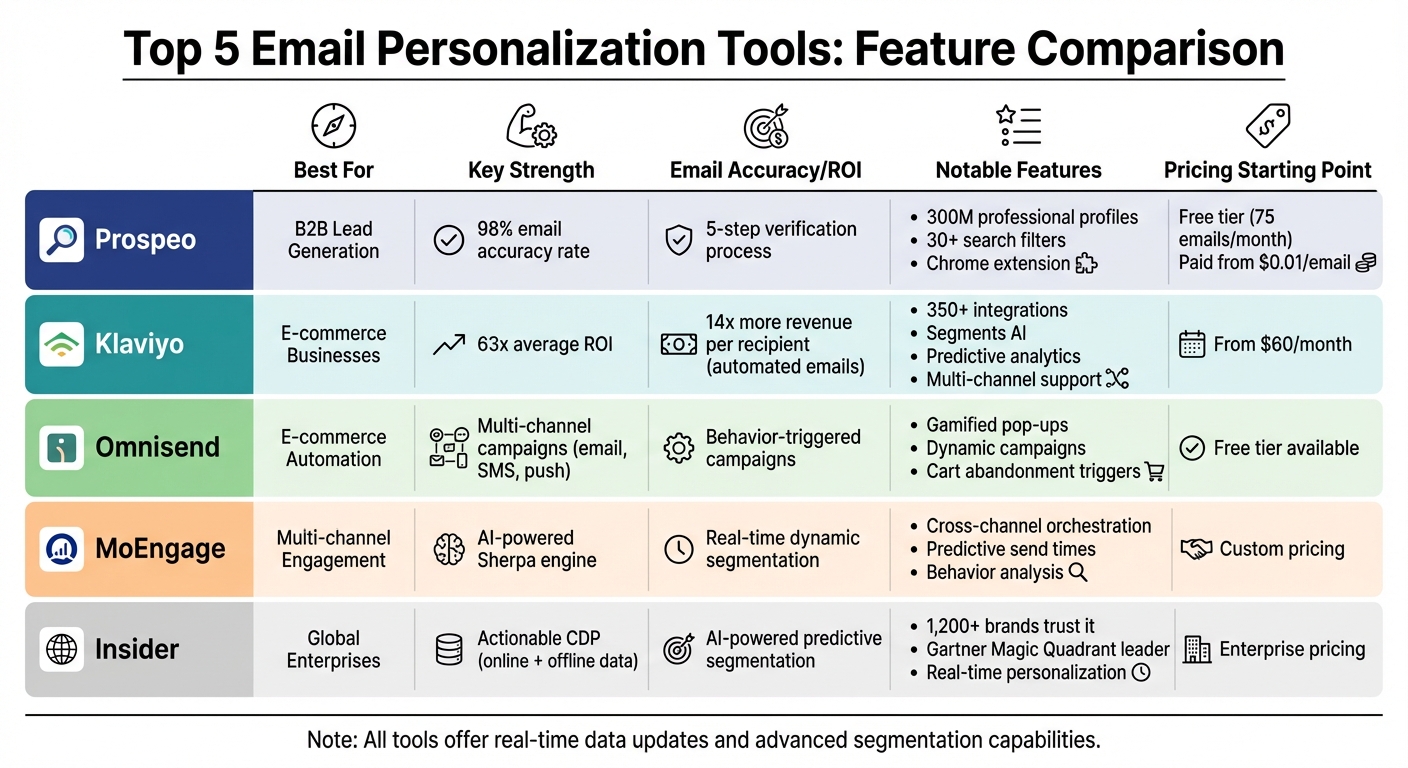
Top 5 Email Personalization Tools Comparison Chart
When it comes to turning customer insights into tailored email campaigns, the right tools can make all the difference. These platforms take the guesswork out of personalization, helping you craft messages that feel like real conversations rather than one-size-fits-all blasts. Here's a closer look at five standout options.
Prospeo
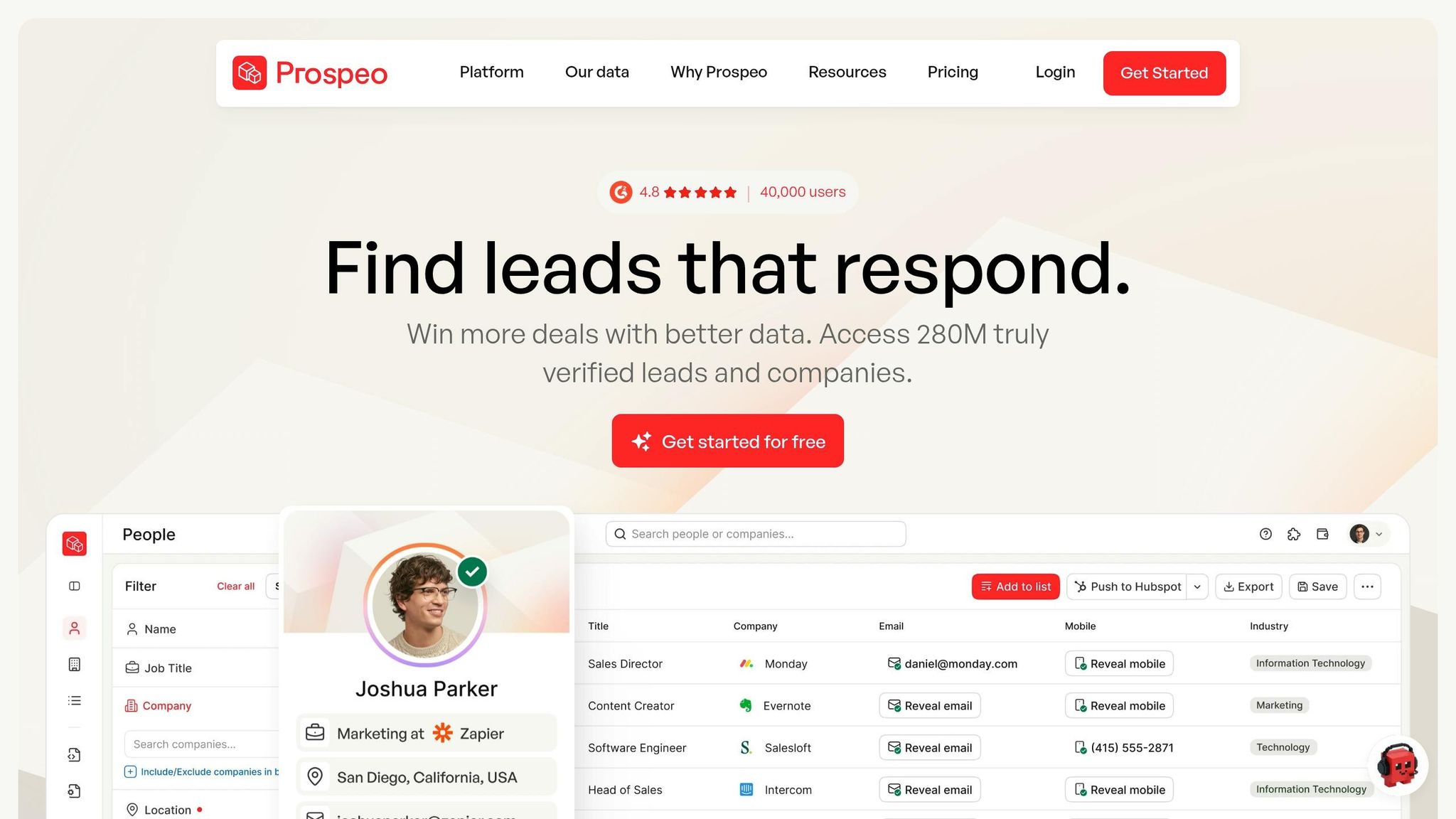
Prospeo is a B2B-focused platform known for its precise lead generation capabilities. With a proprietary 5-step verification process, it boasts an impressive 98% email accuracy rate - far better than the industry average, where error rates can range from 11% to 22%. This accuracy ensures your outreach reaches the right audience, boosting the success of your campaigns.
Prospeo gives users access to a database of 300 million professional profiles, updated weekly. Its Chrome extension integrates seamlessly with CRMs, professional profiles, and websites, instantly verifying emails. With over 30 search filters, you can build targeted lead lists and export them directly to your tools. For example, Stack Optimize scaled its annual recurring revenue from $0 to $1 million using Prospeo, maintaining a deliverability rate above 94% and a bounce rate below 3%. Pricing starts with a free tier offering 75 verified emails per month, while paid plans cost as little as $0.01 per email.
For e-commerce marketers, Klaviyo offers a powerful solution tailored to online retailers.
Klaviyo
Klaviyo is designed specifically for e-commerce businesses, consolidating data from over 350 integrations into unified customer profiles that update in real time. Its Segments AI tool simplifies the creation of audience groups using natural language prompts, while predictive analytics provide insights into churn risk, lifetime value, and next order dates.
Brands using Klaviyo report an average 63x return on investment, with automated emails generating 14x more revenue per recipient. Success stories include Garrett Popcorn, which generated $12,000 in a single month through segmentation tools, and Ruffwear, which saw a 49% increase in email click rates after implementing RFM segmentation. Klaviyo also supports multi-channel campaigns across email, SMS, mobile push, RCS, and WhatsApp - all managed from a single dashboard. Features like Smart Send Time and Reputation Repair AI ensure optimal delivery and inbox placement. Pricing starts at $60 per month based on active profiles, and there's a free tier for smaller users.
"Klaviyo is the ESP that I love the most. I have seen unparalleled success from the platform and would recommend it over anything else." - Chelsea Kinne, Retention Consultant, Tushy
Omnisend
Omnisend is an automation platform tailored for e-commerce, combining email, SMS, and web push notifications. It leverages behavioral data to create dynamic campaigns triggered by customer actions, such as cart abandonment or browsing specific products. Gamified pop-ups make it easy to capture leads and gather preference data. Omnisend offers a free tier, with paid plans scaling based on subscriber count.
MoEngage
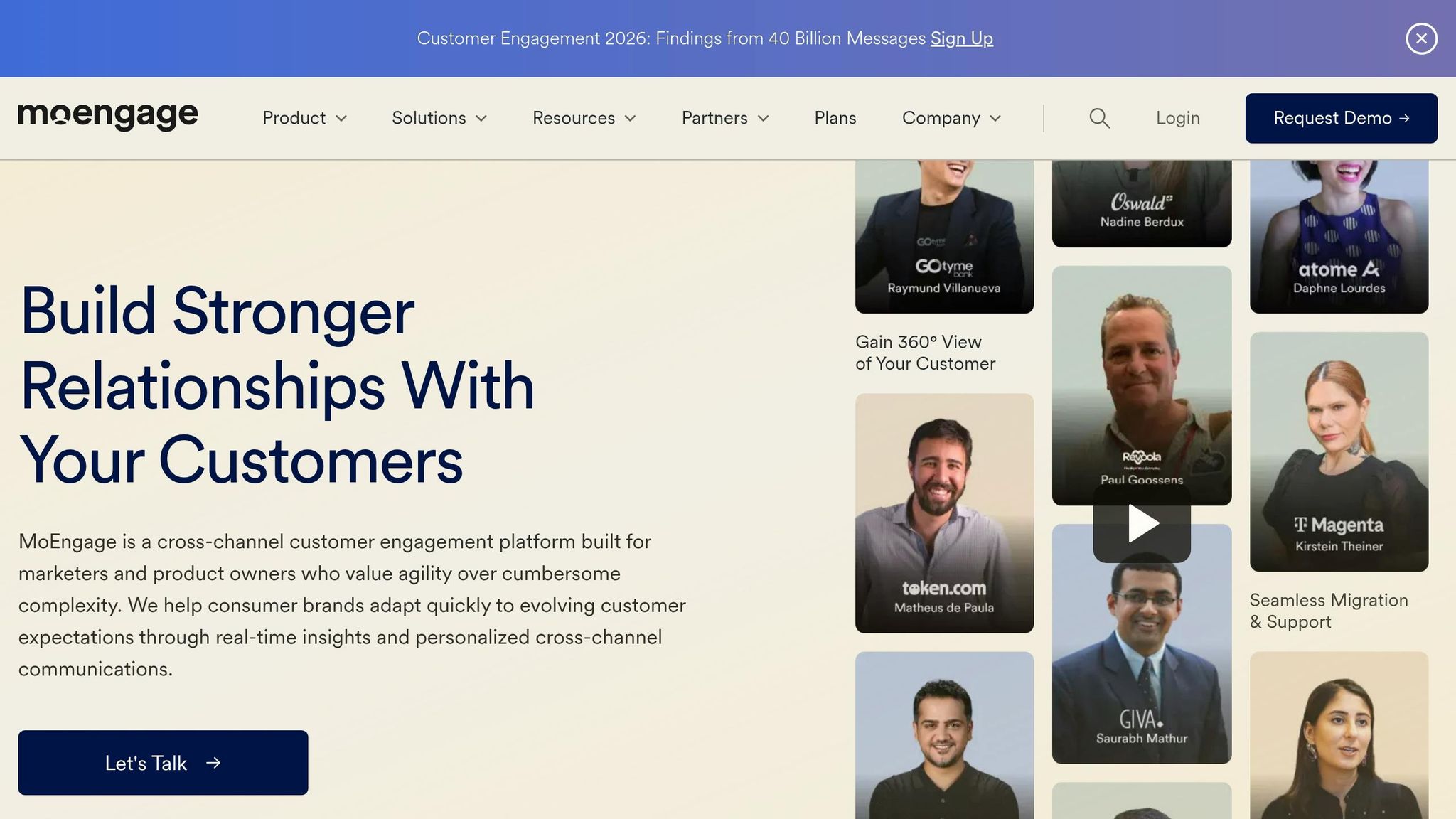
MoEngage focuses on insights-driven customer engagement, using AI to analyze behavior across multiple channels. Its Sherpa AI engine predicts the best times to send emails, preferred content, and next-best actions for each subscriber. Dynamic segmentation ensures audience groups update in real time based on customer behavior, keeping messages relevant throughout the journey. MoEngage also supports cross-channel orchestration, allowing brands to align email campaigns with mobile push, SMS, and in-app messaging.
Insider
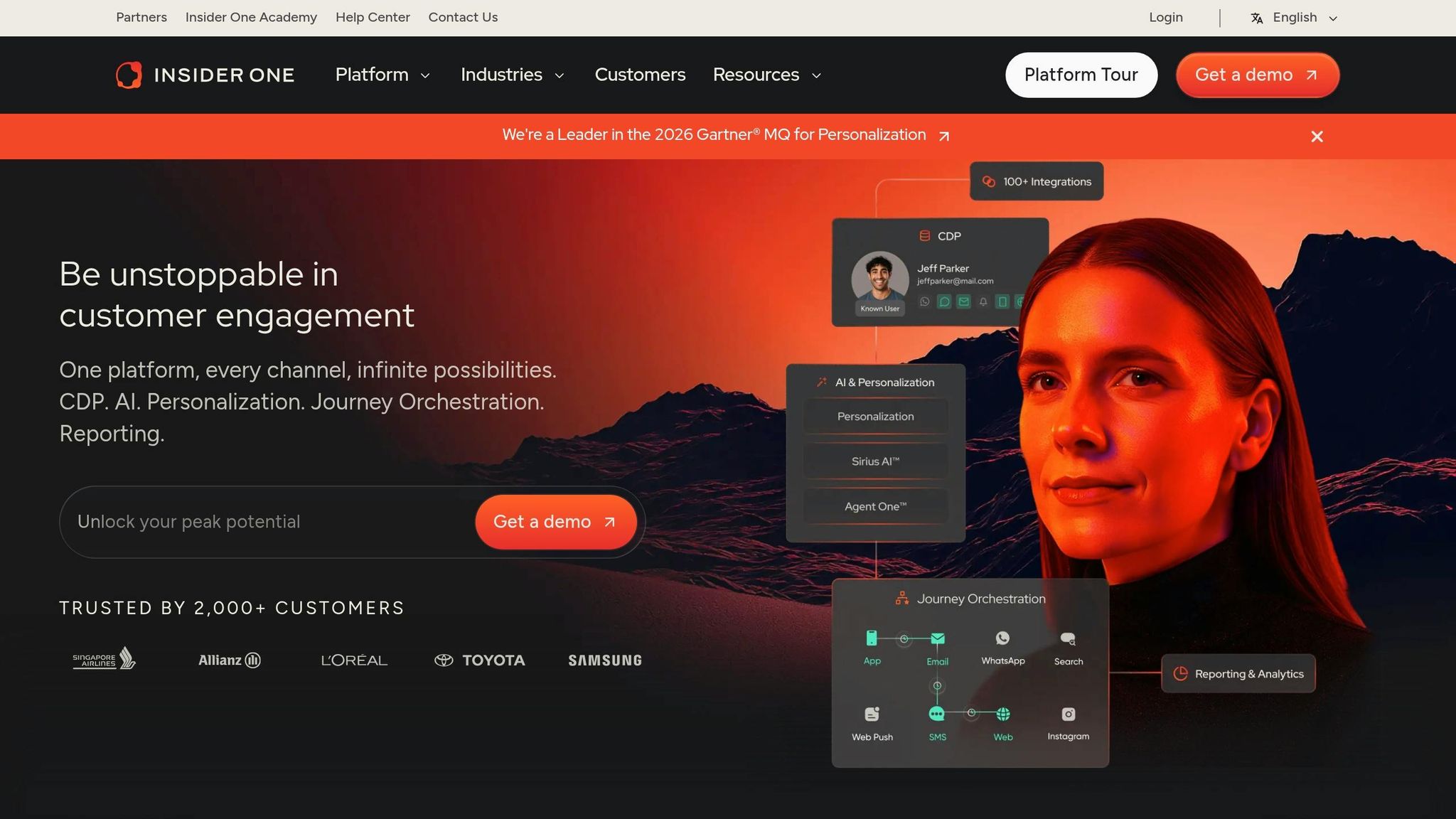
Insider One is built for global enterprises, offering an Actionable Customer Data Platform (CDP) that integrates both online and offline data from sources like CRMs and point-of-sale systems. Trusted by over 1,200 brands worldwide, the platform handles large-scale data seamlessly. Its AI-powered predictive segmentation identifies high-conversion customers, while real-time personalization adjusts content as behavior evolves. Insider has earned recognition as a leading personalization engine in Gartner's Magic Quadrant and is rated the easiest-to-use personalization software by G2.
How Email Personalization Tools Deliver ROI
Email personalization tools have a proven track record of driving better engagement, improving customer retention, and cutting marketing costs. Here’s how they turn customer insights into measurable financial gains.
Improving Open and Click-Through Rates
Personalized subject lines can lead to a 26% higher unique open rate compared to generic ones. But the real game-changer is contextually triggered emails, which boast a 54.7% open rate - a 42.4% jump over standard sends. For example, an email referencing a product someone viewed yesterday will always outperform a generic "New arrivals" message.
Send time optimization takes things further. By using AI to analyze when individuals typically check their inbox, emails are sent at the perfect moment, often boosting open rates by 10-20% while also improving inbox placement and sender reputation.
Dynamic content is another powerhouse. Take icelolly.com, which used browsing data to display deals customers previously searched for or abandoned. The result? A 201% increase in click-through rates and a 45% boost in conversions. Similarly, Pond Planet saw a 61% rise in clicks and a 14.5% lift in conversions by tailoring calls to action (CTAs) and banners based on device and timing.
Segmented campaigns are even more impactful. They can drive a 760% increase in revenue compared to generic sends, with personalized emails achieving 6x higher transaction rates. In fact, segmented and targeted campaigns are responsible for 58% of all email revenue.
These engagement boosts don’t just lead to short-term wins - they create a foundation for long-term customer loyalty.
Building Customer Loyalty
Personalization tools go beyond quick wins by fostering meaningful connections with customers. By tailoring content to individual preferences, brands build trust and loyalty. 76% of buyers expect marketers to provide personalized experiences, and 83% are willing to share data to make that happen. When brands consistently deliver relevant content, 80% of customers are more likely to make repeat purchases.
However, shallow personalization can backfire. As Chad S. White from Oracle Digital Experience Agency explains:
"Research has shown that emails personalized with just the first name - and not carried through the body of the email - are actually as likely to hurt performance as to help it. People see through this trick; they feel tricked when the personalization is only surface deep".
Advanced tools use predictive AI to identify customers at risk of leaving. For example, Thrive Causemetics used Smart Banners to tailor content, resulting in a 17% increase in total email revenue. Meanwhile, Adidas employed segmentation to deliver specific offers to different customer groups, leading to a 35.31% rise in conversion rates among returning users.
Courtney Grab, Senior Customer Marketing Manager at Litmus, emphasizes the importance of deeper personalization:
"It's not just about using someone's name; it's about asking users what they want and need, and how they'd like to be engaged with, then delivering that. This level of personalization truly differentiates your emails from the masses".
Reducing Marketing Effort and Cost
Personalization tools don’t just improve results - they also make life easier for marketing teams. Automation removes much of the manual effort involved in email campaigns. AI-powered tools can create templates, build workflows, and generate dynamic content blocks in minutes, saving hours of work. Plus, modern platforms integrate seamlessly with data feeds like Snowflake, automating data normalization and reducing the need for IT support.
The efficiency gains are undeniable. For instance, J.Crew achieved a 41x return on ad spend (ROAS) using automated retail email personalization. Marketers can produce more content in less time, all while enhancing the customer experience.
Dynamic content blocks are especially valuable. Instead of crafting separate campaigns for different segments, marketers can use conditional logic to swap out images and offers within a single email. Some tools even allow for a "set it and forget it" approach, where one dynamic image URL automatically updates for each recipient.
When you combine a 15% rise in open rates with 10% increases in click and conversion rates, the result is approximately 40% more revenue from the same email volume. Since this added revenue comes without increasing acquisition costs, it directly boosts profit margins.
Conclusion
Email personalization tools have become a key part of effective marketing strategies. The ability to harness unified customer data is what drives their success. By 2026, email marketing is projected to deliver an impressive return of $36 to $45 for every $1 spent, with AI-driven approaches pushing those numbers even higher. But achieving these returns takes more than just adding a recipient's first name to a subject line. The real impact comes from tools that consolidate customer data, anticipate future actions, and automate highly personalized customer journeys.
The move away from outdated "batch and blast" techniques toward data-driven campaigns is what sets the best programs apart. Still, challenges persist. For instance, only 31% of marketing teams feel their personalization efforts are truly boosting their bottom line. Issues like fragmented data and inadequate measurement often hold them back. On the flip side, 72% of customers engage only with messages that align with their specific interests.
To unlock the full potential of email personalization and tackle these hurdles, it's crucial to select platforms that can grow alongside your business. Look for tools that offer unified data views, AI-powered insights, and seamless integrations. Whether you're just starting out or managing a large subscriber base, the tools discussed here provide a clear path to better engagement, stronger customer loyalty, and measurable returns. The real question isn't whether personalization is worth it - it's how quickly you can adopt the right tools to make it happen.
FAQs
What customer data should I use for personalization?
To make your emails resonate with your audience, focus on using data that highlights their preferences, behaviors, and demographics. Here's what to consider:
- Personal details: Include information like their name, location, and gender to make the message feel tailored.
- Behavioral insights: Look at their purchase history and browsing activity to understand what they’re interested in.
- Interests: Take note of hobbies or preferred brands to craft messages that align with their passions.
Using a CRM system can help you segment your audience based on this data. This way, you can send targeted content and offers that are more likely to grab their attention. By combining demographic, behavioral, and interest-based insights, you’ll create a well-rounded personalization strategy that drives better engagement.
How do I pick the right personalization tool for my business size?
Finding the right personalization tool depends on your business's size and unique needs. For small businesses, it's smart to focus on tools that are easy to use, budget-friendly, and offer basic automation features. On the other hand, larger companies often need more advanced platforms that include AI-driven features and a wide range of integrations.
When evaluating options, pay close attention to the tool's features, its ability to scale as your business grows, and how well it fits within your budget. Make use of free trials or demos whenever possible. This hands-on experience can help you decide if the tool complements your workflow and meets your personalization goals effectively.
How can I measure ROI from personalized email campaigns?
To measure ROI from personalized email campaigns, use this formula: (Revenue – Cost) / Cost. It gives you a clear picture of how your efforts are paying off. Alternatively, a simpler version is (Gained – Spent) / Spent, which calculates the percentage return. Both approaches help assess how well your campaigns are turning investment into revenue.