5 Ways to Use Personalized Product Recommendations in Emails
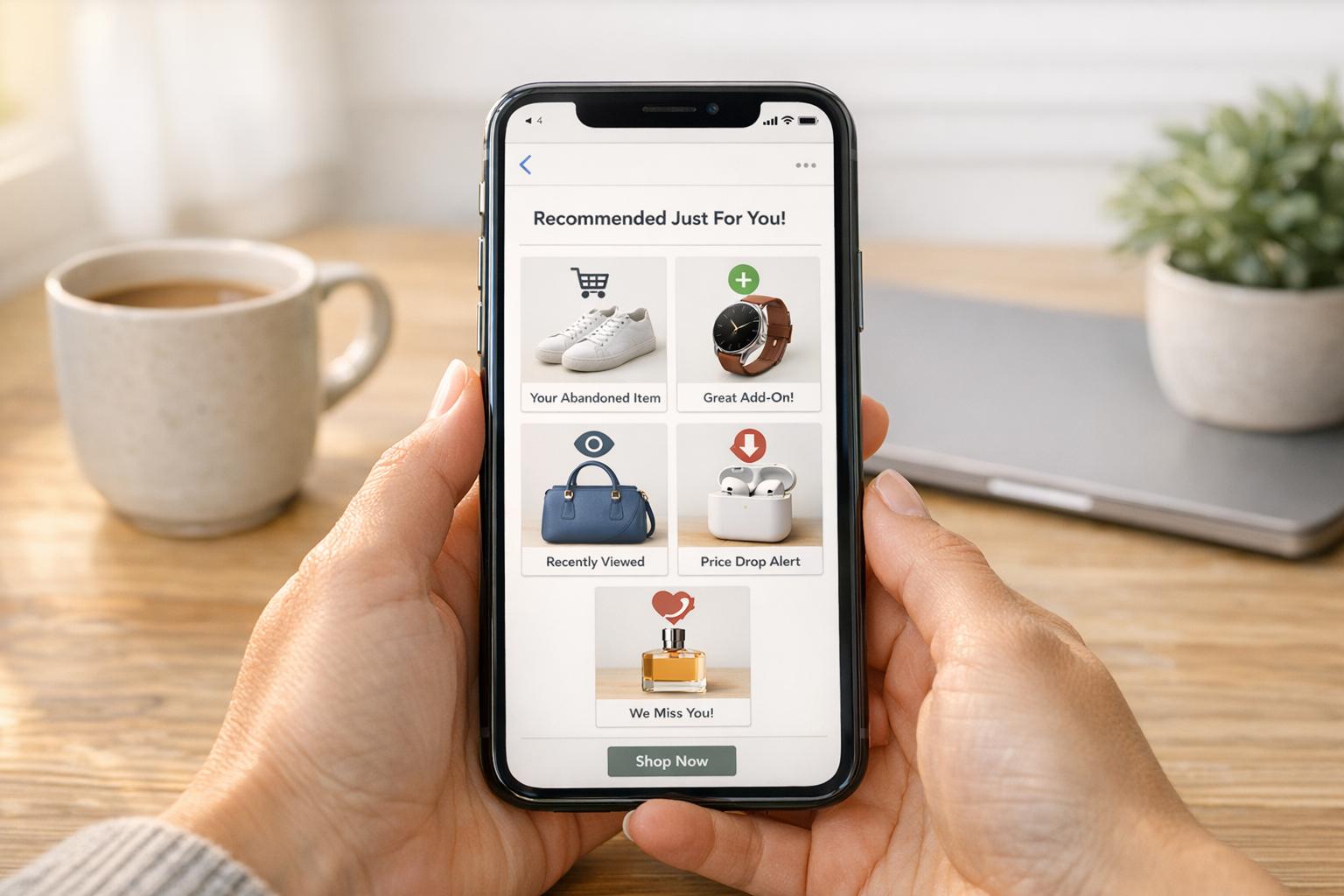
March 25, 2026Email personalization can drive better engagement and higher revenue. Here are five effective ways to use personalized product recommendations in your email campaigns:
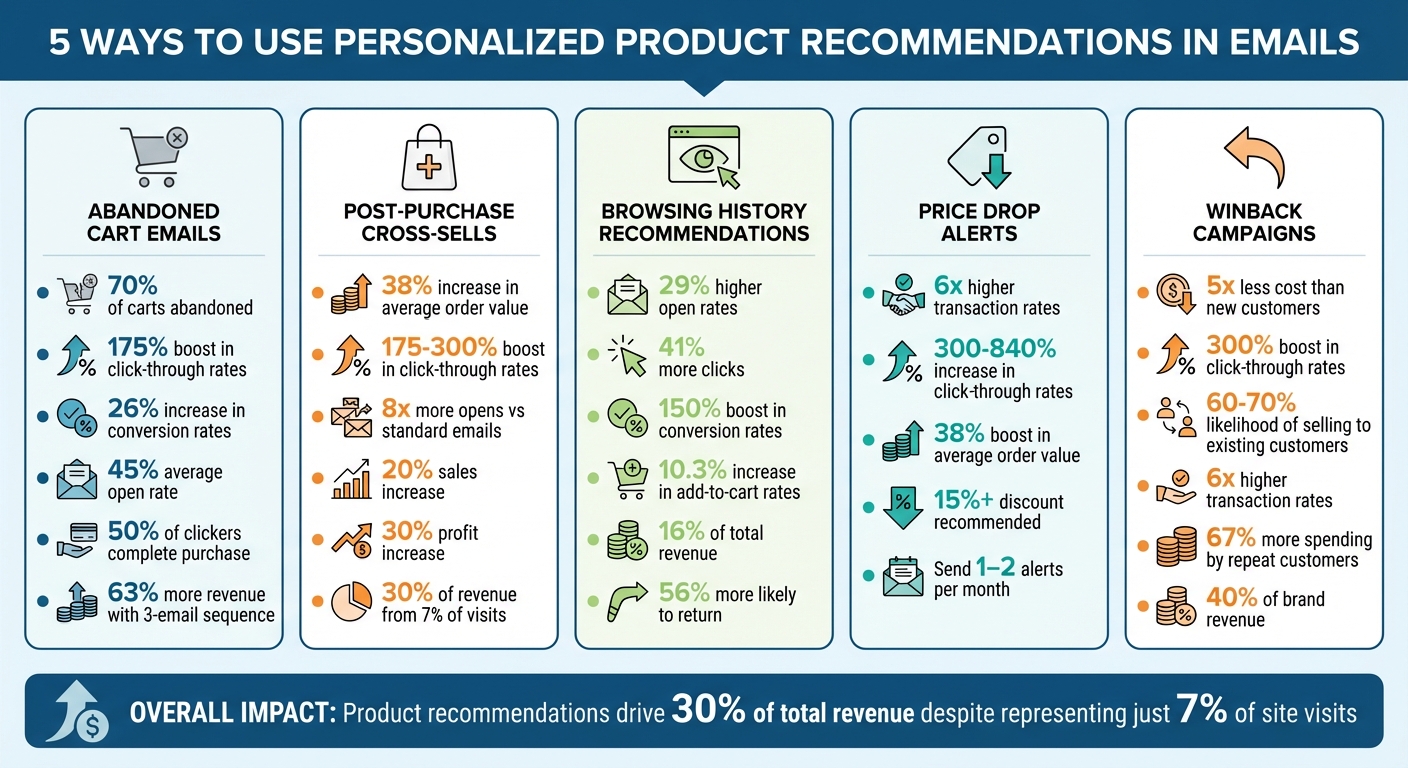
- Abandoned Cart Emails: Re-engage shoppers by including tailored product suggestions alongside their abandoned items. These emails can boost click-through rates by 175% and increase conversion rates by 26%.
- Post-Purchase Cross-Sells: Recommend complementary products based on purchase history. This approach can raise average order value by 38% and strengthen customer loyalty.
- Browsing History Recommendations: Use recent browsing data to highlight relevant products. Emails with tailored suggestions see 29% higher open rates and 41% more clicks.
- Price Drop Alerts: Notify customers about discounts on items they’ve viewed. These alerts can increase click-through rates by up to 840% and encourage quick purchases.
- Winback Campaigns: Reconnect with inactive customers by recommending products tied to their past behavior. Personalized winback emails can cost 5x less than acquiring new customers and drive higher engagement.
Personalized recommendations not only improve email performance but also account for 30% of total revenue despite representing just 7% of site visits. Start with one or two strategies, monitor key metrics like open and conversion rates, and refine your approach for the best results.
5 Email Personalization Strategies: Performance Metrics and Impact Comparison
1. Abandoned Cart Emails with Product Suggestions
Relevance to Customer Behavior
Abandoned cart emails are a direct response to a shopper's demonstrated interest in specific products. With 70% of online shopping carts left behind before checkout, these emails are a powerful way to re-engage potential customers. People abandon carts for various reasons - maybe they changed their minds, found a better deal, or simply got distracted. By including personalized product suggestions, you can stay on their radar and offer alternatives that align with their preferences. This approach keeps your brand relevant and encourages higher engagement.
Potential to Boost Engagement
Adding tailored product recommendations to abandoned cart emails significantly increases engagement. For instance, personalized suggestions can boost click-through rates by 175% and extend browsing time by 344%. These emails already perform well, with an average open rate of 45%. Even better, 21% of recipients who open these emails click through to revisit their cart. That’s a level of engagement most email campaigns can only dream of, making these emails the perfect place to include smart product recommendations.
Impact on Conversion Rates
The numbers speak for themselves: 50% of users who click through an abandoned cart email go on to complete their purchase. When personalized product suggestions are added, conversion rates can increase by as much as 26%. Sending more than one email also makes a difference - brands using a three-email sequence see 63% more revenue compared to sending just one reminder. Timing is critical here: send the first email within 30–60 minutes of abandonment, follow up 24 hours later with social proof, and send a final reminder 48–72 hours after the cart was abandoned.
Ease of Implementation
Modern email tools make it easy to include personalized recommendations with features like drag-and-drop "Recommended Product" blocks or "Smart Banners" that use dynamic content based on browsing behavior. To make the most of these tools, keep the focus on the abandoned item. Place recommendations below the main call-to-action button and include options like frequently bought together items, related accessories, or even lower-cost alternatives. This ensures the suggestions enhance the email without overshadowing its primary goal.
sbb-itb-cef5bf6
2. Post-Purchase Cross-Sell Emails Using Purchase History
Relevance to Customer Behavior
After a purchase, customers are often more receptive to suggestions that complement their original buy. This makes post-purchase emails a great opportunity to recommend related products. For instance, if someone purchases steak knives, it’s logical to suggest a gourmet seasoning set that pairs well with their new tools. Modern recommendation engines take this a step further by using collaborative filtering to analyze what other customers purchased alongside the same item. By aligning these recommendations with past purchases, businesses can naturally increase customer interest and engagement.
Potential to Boost Engagement
Adding personalized product suggestions in emails can lead to click-through rate increases of anywhere from 175% to 300%. Transactional emails - like order confirmations or shipping updates - are especially effective, generating 8x more opens and clicks compared to standard promotional emails. Repeat customers are an even bigger win, as they tend to spend 67% more than first-time buyers.
Impact on Conversion Rates
Cross-selling done right can boost sales by 20% and profits by 30%. Personalized product recommendations also increase the average order value (AOV) by around 38%. Even though product recommendations account for just 7% of site visits, they drive nearly 30% of total revenue. Plus, personalized experiences encourage loyalty - 78% of customers are more likely to make repeat purchases when they feel the experience is tailored to them. This not only improves short-term sales but also strengthens customer lifetime value over time.
Ease of Implementation
The tools for implementing cross-sell emails have become easier to use than ever. Many platforms now include drag-and-drop “Recommended Product” blocks that automatically pull items based on purchase history. AI-powered systems can integrate with providers like Klaviyo and GetResponse, automating the process and removing the need for manual segmentation. To maximize impact, focus on a few highly relevant recommendations and include social proof, like customer reviews or star ratings, to build trust quickly. Since many people check emails on their phones, keep subject lines short (under 50 characters) and use clear, high-quality images to grab attention.
3. Product Recommendations Based on Browsing History
Relevance to Customer Behavior
Browsing history offers a clear window into what customers are actively interested in right now. It captures those "subtle signals" that reveal true intent - whether someone is checking out running shoes, researching kitchen gadgets, or comparing laptop models . Unlike purchase history, which reflects past actions, browsing behavior highlights immediate needs and curiosity. For instance, if a customer is exploring camping tents, they’re likely in the research phase. Sending an email featuring those tents or related outdoor gear at this point can grab their attention. These insights often lead to stronger engagement with personalized emails.
Potential to Boost Engagement
Shoppers love personalization - 62% of them prefer tailored recommendations. Emails crafted around recent browsing activity hit customers when their interest is at its peak. In fact, personalized promotional emails boast 29% higher open rates and 41% more click-throughs compared to generic ones. A great example? In 2024, men’s fashion retailer Pako Lorente introduced browsing-based "Similar Products" sections in their emails. The result? Around $49,000 in products were added to carts within the first month. Additionally, over 80% of marketers have reported better performance after using real-time, dynamic content in their email campaigns.
Impact on Conversion Rates
Higher engagement often leads to more conversions. Recommendations based on browsing behavior can boost conversion rates by up to 150%. They also increase add-to-cart rates by 10.3% and can contribute as much as 16% of total revenue. While product recommendations make up only 7% of site visits, they account for nearly 30% of revenue. By showing customers the exact product they were browsing - along with a few similar options - you make the buying process smoother. Plus, 56% of shoppers say they’re more likely to return to a site that offers personalized recommendations, which builds loyalty while driving sales.
Ease of Implementation
These days, setting up browsing-based recommendations is simpler than ever. Many email platforms now include dynamic blocks that automatically update with a customer’s latest browsing activity. The most advanced systems even use real-time widgets, ensuring the products shown are current and in stock when the email is opened. To avoid overwhelming recipients, stick to showcasing 3–5 highly relevant products. Including real-time star ratings and customer reviews can also help confirm the relevance of your suggestions . For customers with limited browsing data, fallback options like bestsellers or featured items ensure your email still feels complete. This streamlined approach makes it easier to turn browsing interest into actual purchases.
4. Price Drop Alerts for Viewed Items
Why They Work
Price drop alerts are a smart way to connect with shoppers who are hesitant to buy. These alerts focus on customers who have shown interest in a product but haven’t completed the purchase. By keeping an eye on the items they frequently view, businesses can match their browsing habits with a timely discount. This creates a personalized message that feels relevant, unlike generic sale emails that often get ignored. It’s a great addition to strategies like recovering abandoned carts.
Driving Engagement
Personalized emails aren’t just more appealing - they’re also far more effective. Research shows they can lead to transaction rates that are up to 6× higher than generic emails. Including both the original price and the discounted price helps highlight the deal, while adding urgency with phrases like "limited stock" or "offer ends soon" taps into the fear of missing out. Even something as simple as showing star ratings can make the offer more convincing .
Boosting Conversions
Price drop alerts are powerful tools for turning interest into action. Discounts of 15% or more tend to grab the most attention, with studies showing that targeted emails can increase click-through rates by 300% to 840%. They can also push average order values up by around 38%. To maximize results, aim for discounts that exceed 15% - enough to motivate shoppers to act quickly.
Easy to Set Up
Thanks to marketing automation platforms, setting up price drop alerts is straightforward. Tools like Klaviyo, Mailchimp, and GetResponse work seamlessly with eCommerce platforms like Shopify. These systems can track customer browsing habits, monitor product prices, and send alerts automatically when a price drops. To avoid overwhelming customers, stick to 1–2 alerts per month per person and make sure they’re sent as soon as the price changes. This keeps the process efficient and avoids "discount fatigue."
5. Winback Campaigns with Recommendations for Inactive Customers
Relevance to Customer Behavior
Winback campaigns focus on reconnecting with customers by using insights from their past behavior. By analyzing purchase history, browsing habits, and abandoned carts, you can recommend products that align with their previous interests. For instance, if someone bought running shoes three months ago, suggesting complementary athletic gear feels natural and relevant. Additionally, showcasing new arrivals introduced during their absence can demonstrate how your brand has evolved [30, 33]. Targeting customers who have been inactive for 30–90 days often yields the best results.
Potential to Boost Engagement
Personalized winback emails go beyond generic "we miss you" messages by offering tailored product recommendations that resonate with the recipient. This approach can boost click-through rates by up to 300%. In fact, 74% of marketers say that personalized content leads to higher engagement. Adding elements like star ratings and customer reviews not only builds trust but also eases purchase hesitation. Since 35% of recipients decide whether to open an email based on the subject line, incorporating urgency into it can increase open rates by 12%.
Impact on Conversion Rates
Reactivating lapsed customers is significantly more cost-effective than acquiring new ones - it costs five times less. Plus, the likelihood of selling to an existing customer ranges from 60% to 70%, compared to just 5% to 20% for new prospects [35, 38]. Personalized emails are particularly effective, generating six times higher transaction rates. Furthermore, 91% of consumers are more likely to shop with brands that offer relevant recommendations. Repeat customers also tend to spend 67% more than new ones and contribute to about 40% of a brand's revenue [34, 35]. With modern automation tools, tapping into these benefits is easier than ever.
Ease of Implementation
Platforms like Klaviyo, Mailchimp, and GetResponse make launching winback campaigns straightforward [34, 36]. These tools integrate seamlessly with eCommerce systems, enabling you to set up automated workflows triggered after specific periods of inactivity - typically 30 to 90 days. A multi-step email sequence works best: start with a friendly reminder, follow up with personalized product suggestions, include an incentive like a discount, and wrap up with a "last chance" message. While only 24% of recipients might engage with the first email, data shows that 45% interact with subsequent messages in the series. This structured approach ties directly to the broader strategy of using personalization to drive re-engagement and conversions.
Omnisend Product Recommendation Emails: Set Up Personalized Blocks for Higher AOV
Conclusion
Personalized product recommendations transform email campaigns into focused, results-oriented conversations. The five strategies discussed - abandoned cart recovery, post-purchase cross-sells, browsing history recommendations, price drop alerts, and winback campaigns - are tailored to meet specific customer behaviors and needs.
These methods are more than just effective; they can lead to impressive results. For example, they’ve been shown to boost ROI by 122% and generate six times higher transaction rates. By leveraging customer data, these strategies create highly personalized and engaging email experiences.
The road to success involves constant testing and fine-tuning. Since results can vary depending on your audience, it’s smart to start small. Focus on one or two strategies that align with your current data and email tools. Keep a close eye on metrics like open rates, click-through rates, and conversions to see what resonates best with your audience.
As Saitej Makhijani from SendX explains, "It can take some trial and error finding out what works for your business, but once you implement email personalization, the benefits follow".
Experimentation is key. For instance, you might test different recommendation algorithms - cart abandoners might respond well to complementary items, while homepage browsers could be drawn to best sellers. You can also tweak how recommendations are visually presented. Some tests show that removing prices can increase click-through rates by 37%.
Personalization's impact is undeniable. Around 80% of businesses report a 38% boost in average order value thanks to personalization. Even more striking, product recommendations drive nearly 30% of total revenue, despite accounting for just 7% of site visits. With modern automation tools making implementation easier than ever, these strategies can help refine your campaigns and keep engagement on the rise.
FAQs
What data do I need to personalize product recommendations in emails?
To make product recommendations in emails feel personal, start by gathering data on your customers' behaviors and preferences. Focus on key details like their browsing history, previous purchases, interactions with specific product pages, and even abandoned shopping carts. By analyzing this information, you can suggest products that align with each customer’s interests, increasing both engagement and the likelihood of conversions.
How many recommended products should I show in one email?
When deciding how many products to include in an email, there's no magic number. Instead, prioritize quality and relevance to keep your audience interested. Carefully choose personalized recommendations and place them in strategic spots, like welcome emails or dedicated product sections. The goal is to present a manageable number of options so readers feel intrigued, not overwhelmed.
How can I measure if personalized recommendations are effective?
Track essential metrics such as click-through rates (CTR), conversion rates, and overall engagement in your email campaigns. Pay close attention to how CTR and conversions change after implementing personalized recommendations. Beyond email performance, keep an eye on metrics like time spent on your website and repeat purchase behavior. These can reveal valuable insights into customer loyalty and how well your recommendations are connecting with your audience. By analyzing these trends, you’ll get a clearer picture of whether your efforts are delivering tangible results.